

Chenango Supply 1/4-20 x 1-1/2 Stainless Steel Carriage Bolts – 304 Stainless, USS Coarse Thread, 100,000–125,000 PSI Tensile Strength, Corrosion-Resistant Hardware Bolts, (50 Pieces, 1/4-20 x 1.5)
Product Description
Chenango Supply 1/4-20 x 1-1/2 Stainless Steel Carriage Bolts – 304 Stainless, USS Coarse Thread, 100,000–125,000 PSI Tensile Strength, Corrosion-Resistant Hardware Bolts, (50 Pieces, 1/4-20 x 1.5)
- 304 STAINLESS STEEL CONSTRUCTION – Made from 18-8 (304 series) stainless steel for dependable corrosion resistance in outdoor environments, addressing customer demand for long-term durability.
- 1/4-20 USS COARSE THREAD – Standard 1/4-20 coarse thread provides reliable engagement for wood-to-metal connections, decking, fencing, and general construction applications.
- ENGINEERED MECHANICAL PROPERTIES – Rated at 100,000–125,000 PSI tensile strength with 85 Rockwell B hardness, supporting consistent performance where strength and stability are required.
- GOOD FIT AND SIZE ACCURACY – Precise threading supports correct fit with standard 1/4-20 hardware, addressing customer expectations for sizing consistency in bolts used across jobsite and shop tasks.
- 50-PIECE INDUSTRIAL PACK – Bulk quantity supports maintenance teams, fabrication shops, installers, and MRO operations requiring dependable stainless steel carriage bolts for recurring projects.
A carriage bolt, coach bolt or round head square neck bolt is a form of bolt used to fasten metal to wood. It is distinguished from other bolts by its shallow mushroom head and that the shank cross-section of the bolt is circular for most of its length, as usual, but the portion immediately beneath the head is formed into a square section. This makes the bolt self-locking when placed through a square hole in a metal strap, or a round hole in most wood. This allows the fastener to be installed with only a single tool, a spanner or wrench, working from one side. The head of a carriage bolt is usually a shallow dome. The squared section is of the same size as the diameter of the bolt shank, with a plain unthreaded shank. Carriage bolts were developed for use through iron strengthening plates on either side of a wooden beam. It is commonplace though to use them to bare timber, the squared section giving enough grip to prevent rotation.
Technical Specifications
You might also like

Hillman Group 829720 1/4 by 20-Inch Stainless Steel Nylon Insert Locknut, 50-Pack, Single

Hillman 830502 Flat Washer, Stainless-Steel

1/4"-20 Stainless Hex Nut (100 Pack), by Bolt Dropper, 304 18-8 Stainless Steel Nuts.

Hillman Group 830666 Stainless Steel 1/4-Inch Split Lock Washer, 100-Pack

1/4-20 Nylon Insert Hex Lock Nuts, Stainless Steel 18-8, Plain Finish, Quantity 100 by Fastenere

1/4" Stainless Flat Washer, 5/8" Outside Diameter (100 Pack)- Choose Size, by Bolt Dropper, 18-8 (304) Stainless Steel

Lock Nut 1/4"-20 Inch (100 Pieces) Stainless Steel Finish Hex, by Bolt Dropper, 304 18-8 Stainless with Nylon Insert.

1/4" x 1-1/4" OD Stainless Fender Washer,(100 Pack) - Choose Size, by Bolt Dropper, 18-8 (304) Stainless Steel.

SNUG Fasteners (SNG569) 100 Qty 1/4" Stainless Steel SAE Split Lock Washers
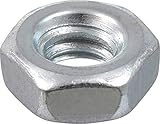
Hillman 150003 1/4-20 C NEX Coarse Thread Hex Nuts, 1/4"-20, Steel, 100 Pieces