
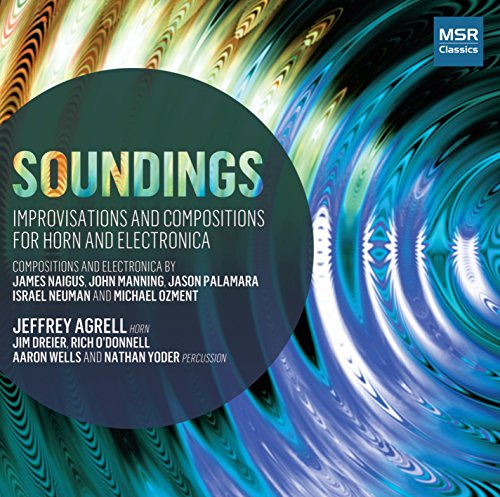
Soundings: Improvisations and Compositions for Horn and Electronica - James Naigus, John Manning, Jason Palamara, Israel Neuman and Michael Ozment
Product Description
Soundings: Improvisations and Compositions for Horn and Electronica - James Naigus, John Manning, Jason Palamara, Israel Neuman and Michael Ozment
All recordings in any genre make use of electronics in some way, even if they purport to be recordings of acoustic performances. The recording process itself is of course electronic: it uses analog or digital microphones, with other electronic processes coming in later such as editing, equalization, reverb, and so on. One big difference with Soundings is that we make a point of emphasizing the electronic component in order to discover new timbres and tone colors, to surprise and awaken our ears and imaginations. Horn players and classical listeners are accustomed to hearing the horn in a fairly narrow range of traditional timbres and settings, so no doubt some ears may be unprepared to know what to make of some of these new settings. We hope and believe that those who can make the leap of ear and imagination to these new realms of timbre, melody, and expression will be well rewarded.
Notes on the horn improvisation here: In speech, what a person says is selected in the moment (i.e. improvised) from everything that person knows and has experienced in life and language. The same is true in musical improvisation all kinds of styles and influences come forth at various times. The improvisation that takes place here is not jazz improvisation, where the player creates a line over a given chord progression. What I did in most cases was to listen to the atmosphere created by the background and then create something seemed to fit. There are no pre-set chord progressions, keys, styles, etc. As in conversation, it was all about listening. I listened to what had just happened and was happening in the moment and then made a quick decision a guess as to what to do next, much like what one does in a sporting event or theatrical improvisation. As you listen to the tracks, you can enhance your experience by guessing what choices I will make, or by imagining what your choices might have been.
Another thing to consider: we sometimes forget that in written compositions composers often create what is easy to notate, staying away from that which is difficult to notate. Since none of the improvisations were written down, I was free to add all kinds of colors and special effects (melodic, rhythmic, timbral) that would be difficult or perhaps even impossible to notate. This freedom, plus the addition of various electronic enhancements, gives this recording a truly unique flavor and spirit of exploration and, well, playfulness.
Technical Specifications
You might also like

Flycalf Christmas Cookie Cutter Set with Embosser 5 PCS Tree Shaped 5" Santa Snowman Reindeer Elf Gingerbread

mixinni Vintage Forest Green Buffalo Plaid Duvet Cover Set Twin XL Size - 3 Piece Mid-Century Washed Cotton Grid Bedding, Retro Breathable Comforter Cover with 2 Matching Pillowcases for All Season

UIN Women's Art Painted Travel Shoes Slip On Canvas Casual Loafers Lightweight Comfort Fashion Sneaker Starnight Daisy (6)

BaronHong Skull Head Halloween Mask with Moving Jaw, Scary Spooky Skeleton Zombie Mask (Black-Golden, M)
Choruslove Rose Gold Love Openwork Charm Bead for Valentines Bracelet Gift

Seaknight Puck Spinning Reels 9+1 BB 5.2:1 High Speed Light Weight Ultra Smooth Powerful Spinning Fishing Reel

Dallas Cowboys Dak Prescott Madden Figure

Duckett Fishing Micro Magic Pro Casting Rod, 7'0" Medium Fast